
Where is the Democratic Republic of Congo?
About the Democratic Republic of Congo
The Land
The People
Life and Death
Health, Energy and the Environment
Education and Work
Travel, Communication and the Media






Back to the Flags of Africa page

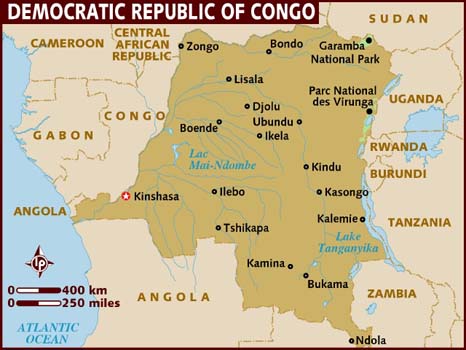


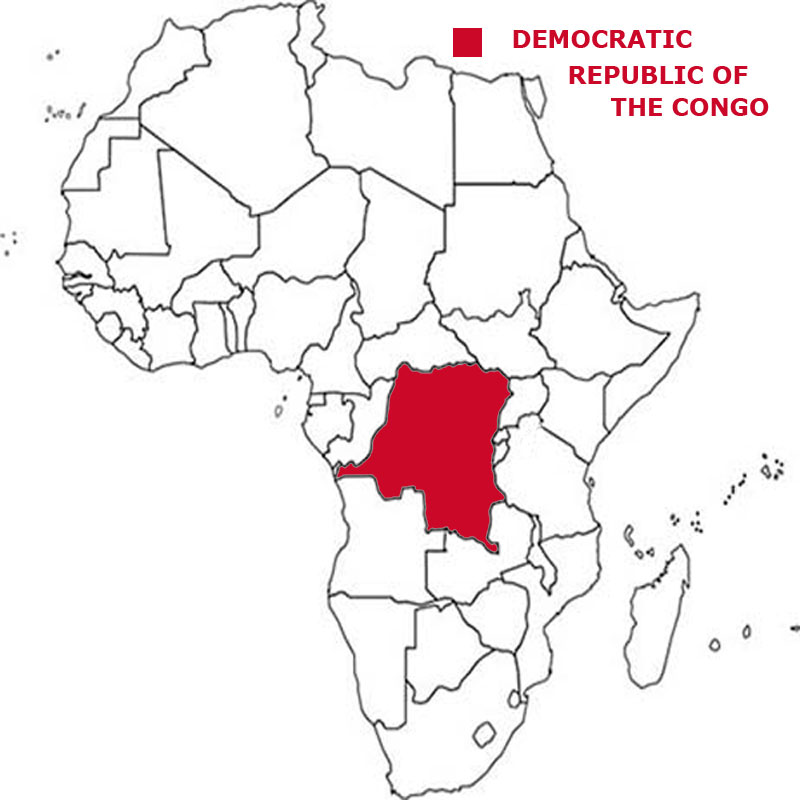
The Democratic Republic of Congo is a vast country in central Africa.
The Democratic Republic of Congo borders the Atlantic Ocean.
The land is mostly low-lying plateau with mountains in the east.
The geographical coordinates for the centre of the Democratic Republic of Congo, also known as lines of latitude and longitude, are:-
Latitude - 0 00S
Longitude - 25 00E

 Back to the top

Check the weather in Kinshasa now.
This is the time in Kinshasa now
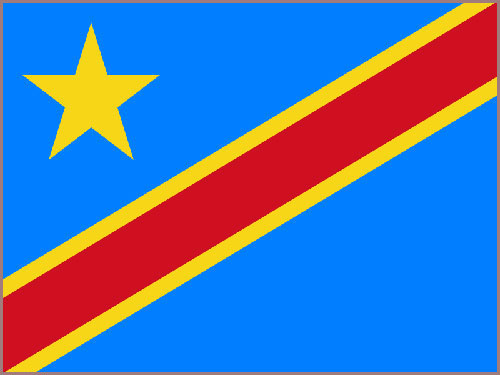 The flag of the Democratic Republic of Congo is sky blue and divided diagonally from the lower flag pole corner to the opposite corner by a red stripe bordered by
two narrow yellow stripes. A yellow, five-pointed star is in the upper flag pole corner. Blue represents peace and hope, red the blood of the country's martyrs
and yellow the country's wealth and prosperity. The star represents unity and the brilliant future for the country.
The flag of the Democratic Republic of Congo is sky blue and divided diagonally from the lower flag pole corner to the opposite corner by a red stripe bordered by
two narrow yellow stripes. A yellow, five-pointed star is in the upper flag pole corner. Blue represents peace and hope, red the blood of the country's martyrs
and yellow the country's wealth and prosperity. The star represents unity and the brilliant future for the country.
The capital of the Democratic Republic of Congo is Kinshasa.
The Democratic Republic of Congo is a semi-presidential republic with a president as head of state and head of the government.
In elections everyone over the age of 18 must vote.
The currency in the Democratic Republic of Congo is the Congolese franc.
French is the official language.
Hear the National Anthem
These are the anthem words
The Democratic Republic of Congo is a semi-presidential republic with a president as head of state and head of the government.
In elections everyone over the age of 18 must vote.
The currency in the Democratic Republic of Congo is the Congolese franc.
French is the official language.
Hear the National Anthem
These are the anthem words

We have already written our own history of England but are asking schools in Democratic Republic of Congo to provide us with a detailed history of
their own country. Check how here.
Back to the top

The total land area of the Democratic Republic of Congo is 2,267,048 sq kms which is the 2nd largest in Africa.
The Democratic Republic of Congo has lakes, rivers and canals which total 77,810 sq kms.
The Democratic Republic of Congo has boundaries with 9 countries
- Angola 2,646 kms
- Zambia 2,332 kms
- Central African Republic 1,747 kms
- Congo 1,229 kms
- Uganda 877 kms
- South Sudan 714 kms
- Tanzania 479 kms
- Burundi 236 kms
- Rwanda 221 kms
The Democratic Republic of Congo has a coastline of 37 kms which is the 39th longest in Africa.
The highest point in the Democratic Republic of Congo is Pic Marguerite on Mont Ngaliema (Mount Stanley) at 5,110 metres.
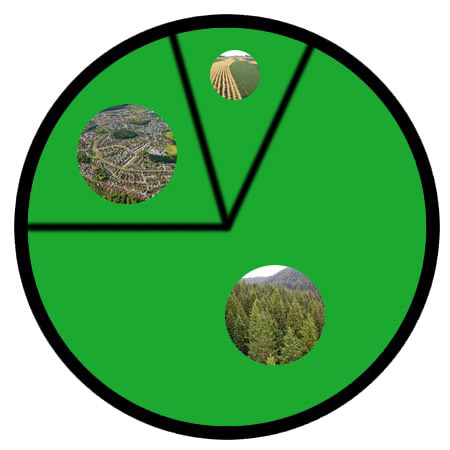
The pie chart below shows how the land is split between agricultural land (crops and pastures), forests and other, which can be towns, villages, desert or frozen waste called tundra.
Back to the top

The total population of the Democratic Republic of Congo is 85.28 million people, making it the 4th largest country in Africa by population.
Of this number 42.74 million are females and 42.54 million are males.
A person from the Democratic Republic of Congo is called Congolese.
To be a citizen of the Democratic Republic of Congo, one of your parents must be a citizen of the Democratic Republic of Congo. It is not sufficient to be born in the Democratic Republic of Congo. You have to live in the Democratic Republic of Congo for
4 years before you can begin to apply for citizenship.
The largest five cities in the Democratic Republic of Congo, by population are:-
- Kinshasa 7,785,965 people
- Lubumbashi 1,373,770
- Mbuji-Mayi 874,761
- Kisangani 539,158
- Masina 485,167
For each country we will give you a diagram showing the population density. This is the average number of people for each square kilometre.
 Each little Owlbut is 1 person and
the big yellow rectangle is 1 sq km. After a while you can compare countries and see which ones are the most crowded. Remember it is only an average as
more people live closer together in towns and cities than in villages out in the country.
Each little Owlbut is 1 person and
the big yellow rectangle is 1 sq km. After a while you can compare countries and see which ones are the most crowded. Remember it is only an average as
more people live closer together in towns and cities than in villages out in the country.
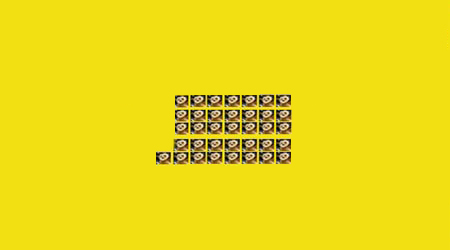
44.5% of the people live in cities or towns.
Each little Owlbut is 1 person and
the big yellow rectangle is 1 sq km. After a while you can compare countries and see which ones are the most crowded. Remember it is only an average as
more people live closer together in towns and cities than in villages out in the country.
44.5% of the people live in cities or towns.
Back to the top

The birth rate in Democratic Republic of Congo is 32.8 births per 1,000 of population
The death rate in Democratic Republic of Congo is 9.4 deaths per 1,000 people.
Check this against the birth rate. If the death rate is higher than the birth rate then
the population will decrease unless immigrants arrive in the country.
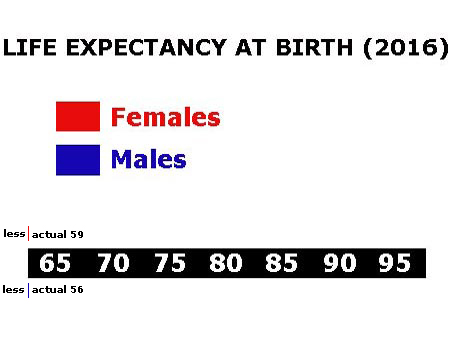
There are 63.1 deaths of girls under 1 year per 1,000 of births and 70.1 deaths of boys.
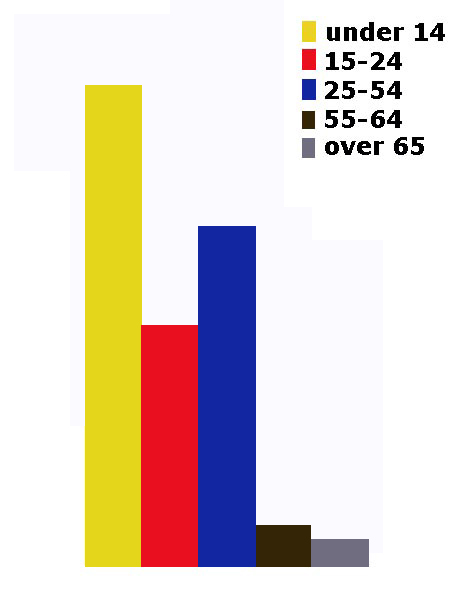
The median age for females is 19.0 and for males is 18.6. The median age is that age which divides the population exactly in half so there are the same number
of people above the median age as below it.
The average age of a woman when she has her first child is 19.9.
The elderly dependency ratio is 6.0. This is the number of elderly people (ages 65+) per 100 people of working age (ages 15-64).
The potential support ratio is 16.8. This is the number of working-age people (ages 15-64) per one elderly person (ages 65+). As a population ages, the potential support ratio tends to fall, meaning there are fewer potential workers to support the elderly.
 Back to the top

The Democratic Republic of Congo spends 4.3% of its total income on health care.
There are 0.09 doctors per 1,000 people.
We have no figures for the number of hospital beds per 1,000 people.
6.7% of the population are estimated as obese.
81.1% of the urban population and 31.2% of the rural population have drinking water that is either piped into their home or they have access to a public tap, a protected borehole, well, spring or
protected rainwater collection facility.
28.5% of the urban population and 28.7% of the rural population have access to a flushing toilet that is connected to a sewer, a pit latrine (that is a
permanent hole in the ground that is looked after) or a composting toilet.
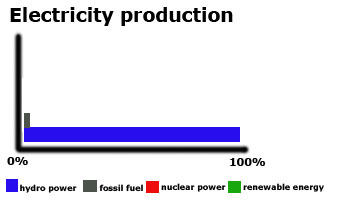
The Democratic Republic of Congo releases 1.4 million metric tons of carbon dioxide by burning fossil fuels in the process of producing and consuming energy. This puts it as the 35th highest in Africa.
Back to the top

The Democratic Republic of Congo spends 1.5% of its total income on education.
Children usually start school at age 6 in Democratic Republic of Congo. Primary education is for six years until age 12 and secondary education can
continue till 18. This may be followed
by further education at a university or college.
We are awaiting information about school terms in the Democratic Republic of Congo.
66.5% of females and 88.5% of males are able to read and write by the age of 15.
8.7% of all people aged between 16 and 24 are not in work. Among females 6.8% are unemployed while with males 11.3% can't find work.
The total number of people available for work in the Democratic Republic of Congo is 31.36 million.
We have no figures for which sector they work in.
We have no figures for the number of the workforce who are unemployed.
Back to the top

There are 26 paved airports in the Democratic Republic of Congo, which is the 8th highest number in Africa.

There are 4,007 kilometres of railways in the Democratic Republic of Congo, the 5th longest in Africa.
There are 153,497 kilometres of roads in the Democratic Republic of Congo, which means Democratic Republic of Congo is in 4th place for the most kilometres of roads in Africa.

There are 4 major national newspapers in the Democratic Republic of Congo.
There are 35.27 million mobile phone users.
We have no figures for the number of people who have a fixed landline.

3.02 million people have access to the internet at home via any device (computer or mobile).
Back to the top

